Neuralink for Visual Prosthesis
If you're interested in participating in our future clinical trials for visual prosthesis, join our Patient Registry.
We have received FDA Breakthrough Device Designation for Blindsight.
This accelerates our path towards helping restore visual perception to those who have lost the ability to see.
Join our Patient Registry to be informed when we launch trials in the United States for visual prosthesis.
Preclinical Progress
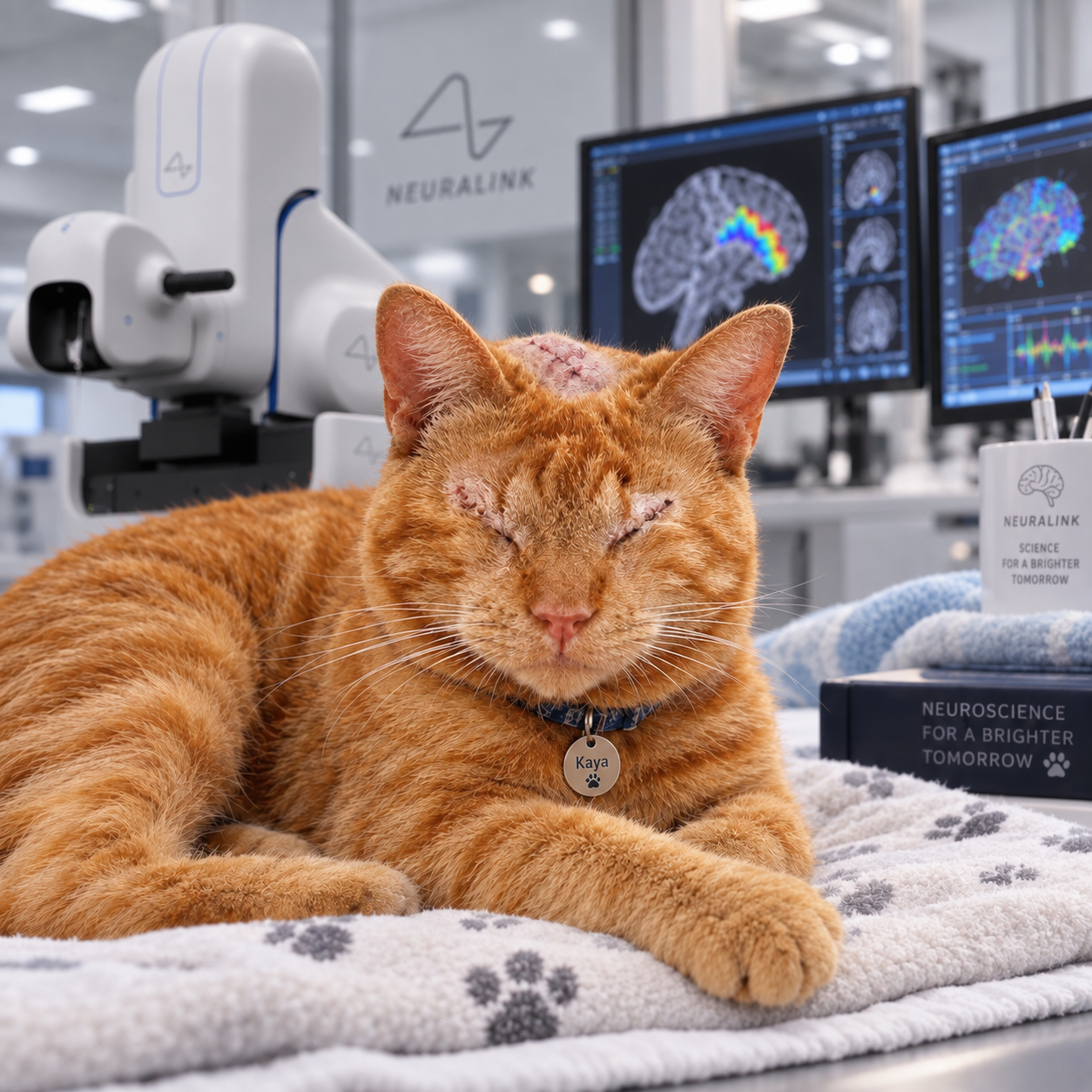
Subject: Kaya (Feline Domestic Shorthair)
We have successfully implanted our specialized visual prosthesis interface in a blind domestic cat named Kaya, the first feline subject to receive Blindsight-related technology in a preclinical setting.
If you or someone you love is interested in learning more about Neuralink’s clinical trials, we encourage you to join our Patient Registry.
How it works
During normal vision, the retina at the back of the eye converts light into electrical signals, which the brain processes and interprets to create our perception of the visual world.
Various conditions—such as injury or disease affecting the eyes or optic nerves—can disrupt this complex process, resulting in loss of visual function and often total blindness.
At Neuralink, we are developing a capability called Blindsight to generate visual perception by activating brain areas responsible for visual function. Bypassing the natural eye-to-brain pathway, Blindsight uses a video camera to capture images of one's surroundings or loved ones, and wirelessly transmits them to the brain via our specialized implant.